Read the blend before you brew
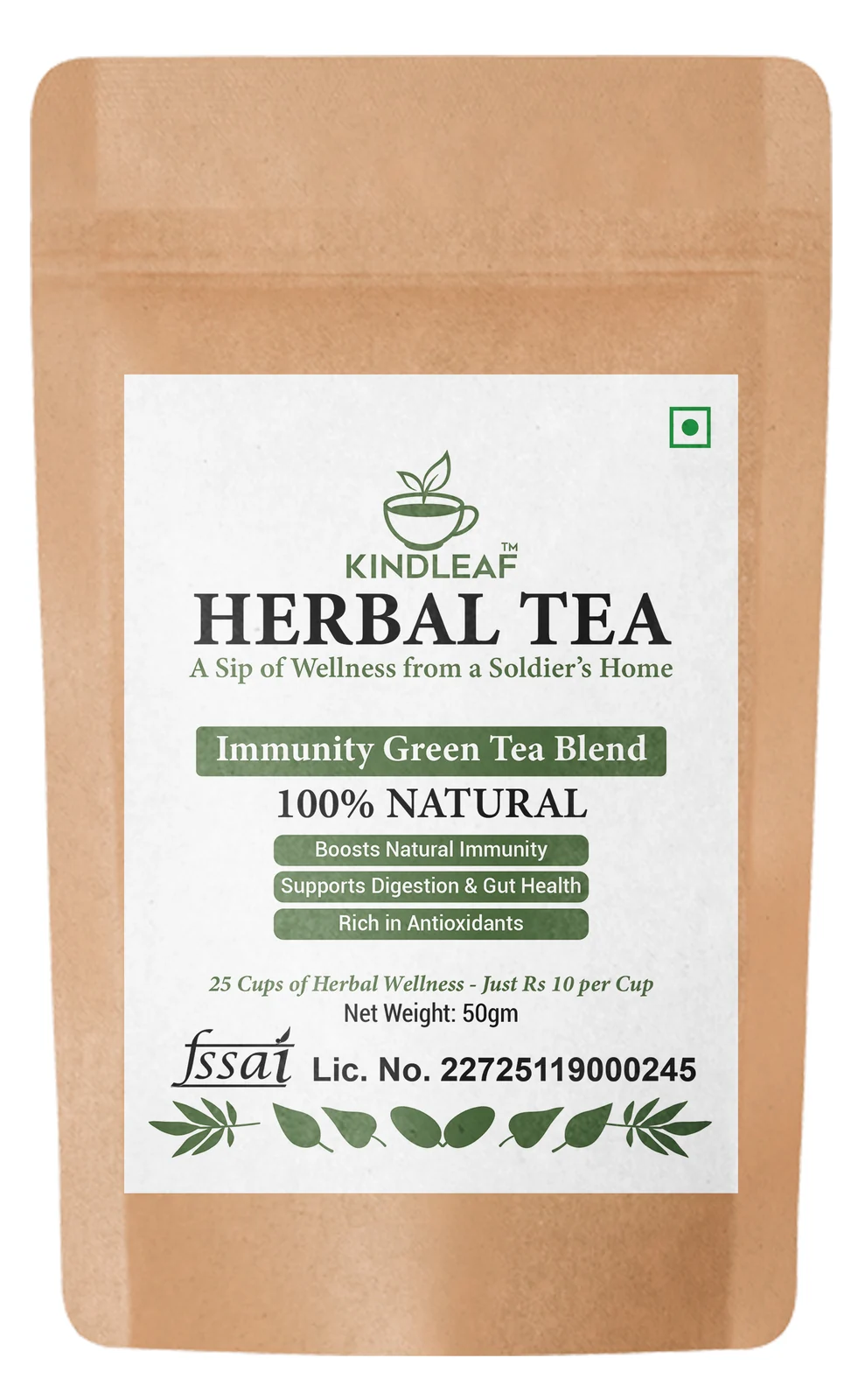
Kindleaf has a short ingredient list: green tea at 30%, dry ginger at 24%, lemongrass at 24% and tulsi at 22%. The proportions tell you what goes into the pack; tasting tells you how those ingredients meet in your cup.
You do not need a vocabulary of tasting notes to enjoy it. Start with simple impressions: fresh or rounded, gentle or lively, a little citrus or a touch of spice. Your descriptions can be your own. Here are four things to look for while you explore the blend.
Green tea: the leafy foundation
Begin by noticing the leafy character beneath the other aromas. You might describe it as grassy, green or lightly drying on the tongue. Green tea forms 30% of Kindleaf's blend, offering a familiar tea foundation for the herbs and ginger around it.
Try a plain sip before adding anything. Pay attention to the taste that remains after you swallow, as well as the first impression.
Dry ginger: a warming note
Dry ginger makes up 24% of the blend. Look for a warm, spicy note: it may be the first thing you notice or something that becomes clearer in the finish. Here, warmth describes the flavour sensation, separate from the actual temperature of the tea.
Take another small sip and consider how that spice sits alongside the leafy base. Does it feel bright, rounded or gently persistent to you?
Lemongrass and tulsi: the herbal layers
Lemongrass, also 24%, invites you to look for a citrus-like aroma. Smell the brewed tea before tasting it, keeping your face comfortably away from the steam. An aroma can give you a different impression from the liquid itself.
Tulsi completes the blend at 22%. Look for the green, herbal notes between the citrus and ginger. You might find them softly peppery or simply describe them as the part that brings the cup together. There is no single correct tasting answer.
Taste the whole cup
Brew with approximately 2 g in 150–200 ml of water at 85–90°C, covered for 4–5 minutes, then strain. Notice the aroma, the first sip and the finish. If you like, write down three ordinary words that describe the experience. They are enough to begin your own tea notes.